S10E1 - Dave Birss
In this episode of 'More Than Work,' Rabiah sits down with Dave Birss, founder of The Gen AI Academy and LinkedIn Learning instructor specializing in AI and prompting. Dave shares his fascinating journey from musician and recording engineer to BBC comedy performer, then through a 20-year advertising career before becoming one of the leading voices in AI education. They discuss his unique approach to teaching AI that prioritizes human thinking over technology, the ethical concerns around AI including environmental impact and copyright issues, and his vision for the future of humanity in an AI-driven world. Dave also opens up about his philosophy of leadership, his concerns about workplace engagement, and why he believes companies need to put humans before shareholder profits.
Timestamps:
00:00 Introduction to More Than Work
00:34 Meet Dave Birss: AI Educator and Former Creative Director
00:57 Dave's Background: From Scotland to London
02:07 Edinburgh Fringe and Early Performance Days
03:19 The Unexpected Comedy Career
06:11 From Music to Advertising
10:43 Philosophy of Servant Leadership
17:24 Leaving Advertising to Start Teaching
19:41 The Power of Sharing Knowledge
25:07 Introduction to AI and ChatGPT
30:42 Creating the Most Popular AI Course on LinkedIn Learning
31:27 Founding the Gen AI Academy
34:34 Ethics of AI: Copyright, Environment, and Humanity
42:18 Energy Consumption: Putting AI in Context
45:02 The Future of Humanity and Brain Atrophy
50:00 Mind Gyms: The Next Fitness Revolution
51:41 Teaching Management Skills for the AI Age
56:10 Rethinking Capitalism and Corporate Structure
62:08 Advice and Mantra: Leave the World Better
62:48 The Fun Five Questions
70:40 How to Find Dave and Closing Thoughts
Note from Rabiah (host):
I first wrote to Dave as a fan of his LinkedIn Learning courses. I was hesitant about using AI for some of the exact reasons Dave talks about in our chat but he made me want to push myself. Plus he was very entertaining which is unusual for skills courses! He wrote back and we ended up having one of my favorite chats. I was slow to edit and publish but am excited to finally share this episode with you, the listener. Thank you for being here and giving me your time! Enjoy.
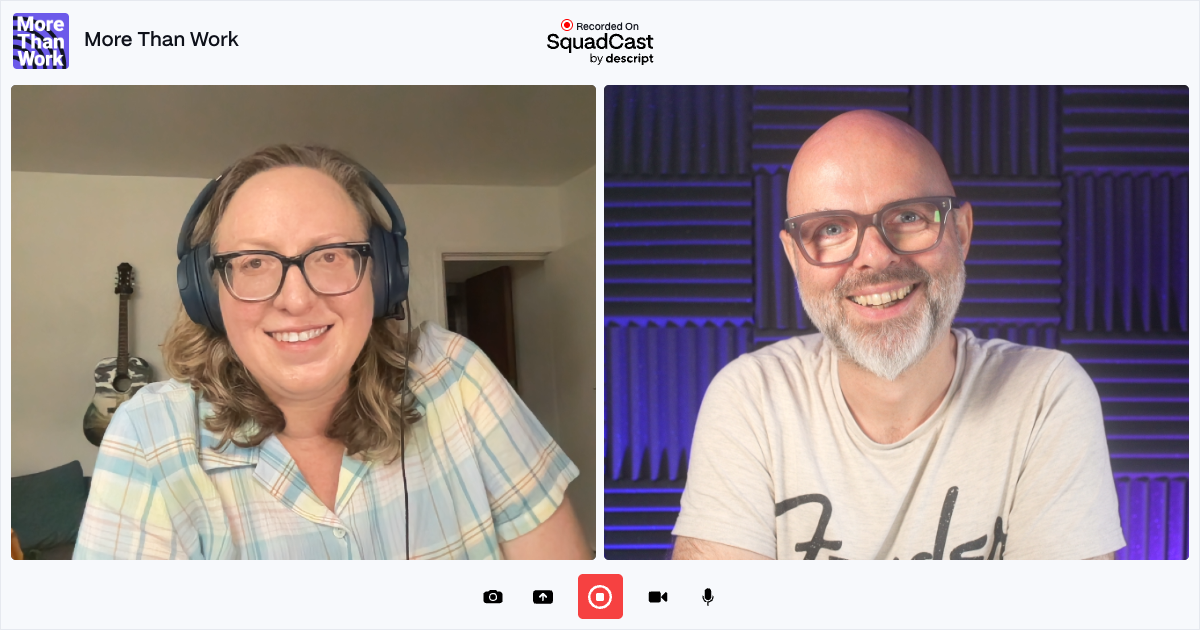
Host Rabiah (London) chats with The Gen AI Academy Founder Dave Birss (also London).
Transcript
Rabiah Coon (Host): [00:00:00] This is More Than Work, the podcast reminding you that your self worth is made up of more than your job title. Each week I'll talk to a guest about how they discovered that for themselves. You'll hear about what they did, what they're doing, and who they are. I'm your host, Rabiah. I work in IT, perform standup comedy, write, volunteer, and of course, podcast.
Thank you for listening. Here we go.
All right. Welcome back everyone. My guest today is Dave Birss. He's the founder of the Gen AI Academy and a LinkedIn learning instructor on AI and that's how I first saw him and contacted him and asked him to be on the pod. So, first of all, welcome to the podcast, Dave.
Dave Birss: Thank you very much. Thank you for, for inviting me.
Rabiah Coon (Host): Yeah, I'm excited to chat with you. So first of all, where am I chatting to you from?
Dave Birss: I'm in southeast London in my little [00:01:00] film studio that I've got where I, I record my courses and, yeah. But I'm, I, I'm a foreigner here as well, so I'm a Scotsman, living in London.
Rabiah Coon (Host): At this point, I need to cut in and just say that we are going to talk about Edinburgh Fringe a little bit, and that's because at the time this was recorded, which was before August of 2025, I was going to head up to Edinburgh Fringe soon, but it took me way too long to get this edited and shipped, basically live to you, the listener.
So I'm leaving it in, even though it's December now, knowing that this happened a long time ago, just because I like where the conversation with Dave goes, talking about his early career. So just enjoy. But don't look for me at Edinburgh 'cause I'm not gonna be there at the time you're listening.
Yeah. Cool. Yeah, and I'm in Camden, and I will be up in Edinburgh, like in about less than a week actually, to spend [00:02:00] time. Up in Scotland for the Edinburgh Fringe Festival,
so I'll be spending time. Yeah. Are you from that there,
Dave Birss: I, no, with the other side of the country. I'm from Glasgow. But I used to, I used to perform at the Edinburgh Fringe, and I've performed there usually as a, as a musician. So the bands that I played in, we would, we'd play over there and, and I, I used to a session musician, so, I, I played for quite a few bands on a record label, and we'd end up sort of playing the Fringe as well very often.
And I did it, I, I did comedy at, at Edinburgh at one point as well. I did a comedy gig in the Fringe as well. But not like you, you're going for it big time, aren't you?
Rabiah Coon (Host): Trying to, trying to.
Dave Birss: And where are you performing?
Rabiah Coon (Host): so this, I'll be at a place called Bar 50. It's run by a Laughing Horse. There's a, there's several major like companies or, or organizations that run venues and Laughing Horse is one of the two free fringe ones. And so, [00:03:00] yeah, they gave us a spot for five days. So a friend and I are gonna do a split bill up there, so it should be fun.
Yeah.
Dave Birss: good for you.
Rabiah Coon (Host): Yeah. Thank you. But, so when, at what point in your career, because I'm gonna talk about your career and how you've gotten to where you are now and doing that, At what point in your career were you doing music? Music?
Dave Birss: When I left university, I did, I, first of all did a degree in computer programming and advanced mathematics. And then I did a degree in degree in marketing and management as a postgraduate. And I did it with the idea that, education was going to be my fallback if I didn't make it as a musician. But as I finished my second degree, a record label came to me and, I'd already played some session stuff for some of the bands on their label.
And, they said, well, Would you like to come and work for us? And we'll train you up as a recording engineer and you can help us with marketing. And, [00:04:00] so I, I did that and I used to go to the studio. I'd be there at, nine in the morning, cleaning the tape machines because it was the old days before digital and it was like two inch tape and a one inch tape machine slaved together.
And I would go be in there cleaning it all. And we had an old desk, I think it was at Abbey Road or something like someplace like that. And it, it, great big dials on it, this desk from the 1960s. And so I would be there like occasionally soldering things that went wrong. So I did some, I did that in my early twenties and I was, I was a musician for a few bands and, a lot of the people I played with went on to become very successful.
And, I decided to quit and I get into advertising instead because I'd kind of had a little bit stint in the middle doing standup for the BBC. And then, I got my, I got offered my [00:05:00] first job in advertising the same week as I offered my first TV show, and I decided to go to, I decided to do advertising instead.
Rabiah Coon (Host): Wow. So what was, wow, okay. So as far as, as far as that goes, I mean, were you doing, like, were you warming up for the BBC, like warming up crowds or what were you doing?
Dave Birss: I, I, I closed the show, so, so there was, there was a sketch comedy show in Scotland.
Rabiah Coon (Host): okay.
Dave Birss: and I was, I was a musician for the, the theater version of the show. So we would do incidental music and we would sort of play after the show as well. And one night I was getting drunk with the writers of the, of the show after we'd done it.
And they were, they were the folk who wrote Rab C. Nesbitt, which was a sort of very popular comedy show in, in Scotland at the time. And I was getting drunk with them afterwards. And I was just making up these stupid songs on the guitar, and they were drunk, so their [00:06:00] judgment was impaired. And they said, do you want to close the show next week with half an hour standup?
And I was drunk and my judgment was impaired. And I said yes. And I woke up the next morning going, oh, "What have I done?" Only one week to write half, half an hour of standup. I think I got to about 20 minutes worth of standup, but still, my goodness, it normally takes months to get to 20 minutes of standup
Rabiah Coon (Host): Yeah, at least.
Dave Birss: I just had to write it in a week and go for it.
And I mean, I was pretty terrible. And doing like character comedy where I sort of made up this stupid, annoying character. And then I would sing these songs and because I went on after the main show, the first gig that I did was to 4,000 people
Rabiah Coon (Host): Oh my gosh, that's insane. Like you jumped in.
Dave Birss: And I, I went on stage and I, I, you know, my goodness, I was
absolutely terrified. I went on stage and I did my 20 minutes. The show was happy and warmed up for [00:07:00] me, so it went down an absolute storm. But the last night of the tour, the show had been an absolute disaster. And every, you know, the, the audience in Glasgow, my hometown of Glasgow, were aggressive. And I then went onto this room of angry Glaswegians and the, I started to do my stuff and, and there's heckler in the audience is "get off, you're shite", you know, and the sort of usual, yeah, thanks for coming, dad.
All that kind of stuff.
Rabiah Coon (Host): Yeah. Yeah,
Dave Birss: it was just like this guy wouldn't, wouldn't stop. He just, he was drunk, he was angry and he just kept shouting. So I nodded over to the bouncers to sort of deal with this guy and they folded their arms and turned their backs on me. And I thought, alright, I'm gonna have some fun here.
Sir. Sir, I am clearly, I'm shy. does anyone in here disagree with this gentleman that I'm shy. And they're like, it's like, okay, no one's disagreeing. So I think we're all on the [00:08:00] same page here. So, sir, please, you must be better than me. "Ah, yeah. I am." Come up on stage.
Rabiah Coon (Host): No way.
Dave Birss: And I brought this guy up on stage and you know, I sort of gave him the microphone and he's there. He's got a microphone stand and he is holding onto the microphone stand basically to, to stop himself from falling over.
It's, it's his third leg as he's standing on stage and he just starts laying into the audience and just insulting and swearing at everyone. And while was doing that. I walked out. I took my stuff, went to the box office, got my money, and then the following week I got a phone call from the BBC saying, oh, we really loved having you on the tour, and, we've just been commissioned for another series and we wanted to offer you five minutes of the show every week to write a topical song.
And it's like, okay, that's a lot of work to write a topical song and then sort of shoot five minutes of video or [00:09:00] whatever. And, and it's like, okay, how much are you, how much are you paying? And they told me how much it was, and I just burst out laughing and said, no, but thank you. It's nice to be asked.
And I said, no. And yeah, I then started my first job in advertising instead.
Rabiah Coon (Host): Wow. Wow. See that, I did not expect all that. That's, that's so crazy though. I mean, just what a, like what a start and end really quick to a standup career too. So do you still play music?
Dave Birss: I don't perform anymore. I've got, I've got an issue with my, my hands that, I sort I of can't play very long. So I, I sort of play for fun, you know, when I am, when I'm on stage, I'll very often have like a harmonica in my pocket in case the tech goes down and then I'll, I'll get the harmonica out and I'll, I'll sort of entertain the audience while the tech gets fixed.
But,
Rabiah Coon (Host): cool's cool.
Dave Birss: I don't have the hunger to, to go out and play. I mean, I'm an old [00:10:00] man now. I'm in my fifties, and I don't have the need to, to, to go out and play, gigs. and nobody's really interested in the kind of stuff I would want to play anyway, so, yeah.
Rabiah Coon (Host): Yeah.
Well, and so then the advertising, so yeah, you went into your first job in advertising, so did you, did you enjoy it? You did that for most of your career until you did what you're doing now, right?
Dave Birss: I, I did that for about 20 years. and I went from being a, a writer, I was an art director, and then I became like a head of digital because I, I was known for the sort of stuff that I would do, online. And then in 2010, I was, I was a creative director at one of the big ad agencies and there was politics and I couldn't be bothered with the politics.
And I, I, I quit [00:11:00] and I was getting interested. I'd set up this division within the company, which was education. And what I'd been doing was I'd, it'd be like mandatory education for the creative department
where they had to come along. And I would, every two weeks I would do a lecture explaining to them where the good stuff was.
Because as a creative director, your job is to direct people creatively. It's kind of clue is title. And people would come with ideas and I'd go, that's shit. That's shit. That's shit. Ooh, there's something in that. Could you push it in this direction? And then inevitably they wouldn't quite take it where I was hoping they would take it.
So instead of doing the, that push approach, I decided to try the pull approach and instead I'm gonna show people who the good shit is.
And it'd be like, okay, here's social movements, here's what we can learn from social movements. And then they would get a cheat sheet of stuff they could do to try and understand that.
Then, okay, [00:12:00] here's the next thing. This is internet things. Let me explain how that works and here's a cheat sheet for that. So, so each two, every two weeks I would do a lecture on a different topic, which was a lot of work, but it kind of was where I learned that I love teaching,
Rabiah Coon (Host): Yeah.
Dave Birss: the whole seeing that sort of epiphany happen to see the, the impact it has on people.
And that was really where the teaching thing came. So when I then quit in 2010, I quit to start an education company for the ad industry at the exact time that the financial crisis- crisis impacted the industry, and the first thing to be cut is training. , so, so I ended up sort of traveling around the world, teaching at universities.
I wrote some books. I did a TV series. I wrote, directed and presented a documentary series and yeah, it's just been a, a, a weird journey that I've had, and I've kind [00:13:00] of got this corporate attention deficit disorder where something shiny comes along and they're like, Ooh, let's look at that.
Rabiah Coon (Host): Yeah. Yeah. Well, and so with the, with the teaching too, I mean, you kind of said at the start that you you know, had you had things not worked out, you could fall back on education and you end up, you know, doing that and educating people. Did you find that you were a better boss at all when you started having the approach of teaching people versus kind of directing them, I guess, for lack of a better word?
Dave Birss: Yeah, I mean, it's always been part of what I did when I first stepped into like management positions. I was, I was promoted to a leadership position at a stupidly young age. I think I was 27 or 28 when I first found myself, in a leadership position in a creative department. And that was too young.
And, so, so I ended up running [00:14:00] the, the department and there was like 20, 20 or so creatives in the department. I was the second youngest and I was running the department. So at that point, you can imagine there's politics that, you start to get so. There's like two approaches I could have had. One is to try and lord it over everyone and be the typical arsal, creative director with, with the, the big eagle.
But that's not really the way I work. I'm more interested in people and growing people and helping them. So instead, I saw my role as being below them and helping lift them up. So what I would do is I would go around the department in the morning and just go, right, what are you working on? If you get anything to show me.
I would give them feedback and stuff they showed me. I'd say, is there anything, this is, this is my deal with them. Is there anything stopping you from being excellent? Is there anything stopping you from doing the best work you've ever done? And at that point, they're giving me excuses. So they've, they've got no excuse.
[00:15:00] And, and what I would do is they, they'd say, all right, this person's harassing me, or I've got this stupid little piece of work on. I'd say, alright, I don't want you to worry about that. I'm gonna take that, i'm gonna sort that out. And I would go and I would, I'd tell people to stop harassing them, or I would take away the crap work and I would do the crap work.
And I spent a year and a half doing the worst work of my career, because I was taking away the awful soulless jobs, so that my department could do the excellent stuff. And the deal was, as they understood, is that I would take away the crap so that there was no excuse for them to not produce the best work they'd ever done.
And it worked. The work that I got from that department was incredible. They would, without me having to ask, they would work evenings, they would work weekends, they would do anything they could to produce the best work they possibly could. And it was one of the, that was kind of like the best period in my career, possibly.
And it [00:16:00] was, yeah, at that point it was one of the hottest agencies in London, which was, which was great.
Rabiah Coon (Host): Yeah. And that's, that's cool. And I mean that's, I've studied servant, I've studied leadership in different forms. but one of them is servant leadership, and that's like, almost like taking it to a whole different level really of actually literally serving the team.
But I think that the best leaders do that.
The best leaders know what, what leading doesn't mean, just standing around and barking orders out at people. That's not like the, that's not what leadership is. That's just telling people what to do so that was really a big insight to have at such a young age too.
Dave Birss: Yeah. I think I, I'd also experienced really bad bosses and, you know,
I just don't want to be that I don't, I, I, I care about people. I, I want to see people do well, and, you know, I'm not a confrontational person in any way. And, and I didn't want any [00:17:00] of, I didn't want any of that. I didn't want to be the artsy arsehole.
Rabiah Coon (Host): well, so then you, so you did, you know, you said you, in 2010, you, you know, left your, left your job, and you decided you were going to start teaching, and then of course the what happened happened with financially, so the financial crisis. So then at what point did you what were you teaching then when you were going around?
You said you were teaching, basically advertising, right?
And things like that. But what were you, like, what were you teaching then, and then when did you kind of end up being able to establish more of a home base again and, and your own, you know, business?
Dave Birss: Well, I was, I was teaching, I mean, there, there was, there was stuff that was very advertising kind of stuff. So, for example, when, advertising agencies are doing campaigns that go across different media channels, what they tended to do was absolute [00:18:00] crap. So they would do a television ad and then they would take an image from that and put it in a poster and put it in a press ad and put it in a banner ad, you know, and it'd be like, oh, geez, that is just brainless.
That's shit. It's not understanding the moment that humans are in when they receive the message. It's not understanding the strength of the media that you're using. So I developed a way of, sharing my approach to the way that I would approach it. And I ended up, running courses for, , all sorts of organizations, some universities. There was like the trade body for advertising in the UK is called the IPA. There's like an awards body called DNAD. And I would, I would do training for them. I would conduct training on behalf of them, and then. I got called on by a lot of companies to teach them creative skills:
How do we come up with ideas? How do we communicate effectively?
[00:19:00] So all the stuff that I learned in my career, I would then share. And from that, that some of that stuff then sort of led into, you know, writing, writing books and stuff. So this is like one of my books here. And, and, so I've, I've written, I think in the last 15 years, I think I've written nine books.
I think five of them are available to buy. My whole thing is about finding out stuff, working a, a way of simplifying the communication of that and then sharing it with others. So whether that's through books, whether it's through courses, whether it's through workshops, to me, it's all the same thing.
It's all just about, I get information, I try to simplify it, and then I share it.
Rabiah Coon (Host): Mm. Yeah. And, and I think there's something I, I learned in my, earlier, in my career earlier than I am now, but I think a bit later than I wish I would've, is just how powerful it is to share ideas and to share knowledge and information. Because [00:20:00] in a way, and I don't know if it's, I mean, you were in advertising, so it could be kind of very similar to like what you end up with in a lot of organizations in the states where you try to become almost the linchpin.
I think Malcolm Gladwell even talked about the linchpin, but you try to become the linchpin, like you're the person who has the information, so you're the most valuable, but that ends up not being true eventually, and, and you end up, you know, hurting yourself in the process when really other people having the information is valuable.
So everyone can learn, and everyone
can share, and the team can do better. And. And so have you, did you kind of, did that come naturally to you too? Like, especially I'm thinking now with AI and the fact that you're teaching people really valuable information about using AI, when really you could maybe keep that to yourself and just become this expert that goes around making a million pounds at each company
Dave Birss: Oh, if only. I've done, I've done it wrong. Rabiah.
Rabiah Coon (Host): You did. Well, I don't know. You know, I'm, I'm the visionary here, obviously, [00:21:00] but you know what I mean? Like, people, people think that sharing knowledge and information like isn't, isn't valuable sometimes, but you, you do it.
Dave Birss: I guess from the, the, there was kind of this, my approach when it came to, doing things online, when I was doing digital stuff was, you know, my philosophy came from the Red Hot chili peppers. You know, What I've got, you've got to give it to your mama. Give it away, give it away, give it away now. And, and, and
Rabiah Coon (Host): Oh my god.
Dave Birss: the whole, that, that whole approach of, of, of just when you've got it, just, just give it away, the value will return to you in some way. Now, it took years for the value to return to me, and I spent a lot of my time and I still do just giving stuff away. So, like my website, I have got a stack of free web tools that I've coded and they've been useful to me, and I just give them away. Anyone can use them for free.
[00:22:00] And like, there's one tool on there that I, I, I coded, I coded it over a weekend for my daughter. And 'cause she was into story dice. You've got little pictures on dice. You shake the dice and then you get random pictures and you stitch them into a story. so I created an online version of Story Dice just so that we could take it where we go and I could just get my phone out and she could play story dice on the phone with me.
And it, gets about 2000 hits a day.
Rabiah Coon (Host): Wow.
Dave Birss: This, this tool. And it is just one of these things. I just give it away. I get nothing back from that. Nothing. But it's something that, yeah, I've, I'm very much, if I've got value to share, just go for it. Just, just put it out there. And it's like, it's almost like, you know, writing books, you don't make money from writing books. You know, I, this, this book here, I, I haven't had a royalty check for this book in [00:23:00] years, but.
Rabiah Coon (Host): Yeah.
Dave Birss: Mean, I, I don't know, maybe, maybe my publisher's scamming me, but, you know, haven't, had it's, I've not had any money from this in years. And, book here that I, I self-published and, and this book here, I priced it in a way that I make virtually no money off this.
Rabiah Coon (Host): Right.
Dave Birss: So when people buy it, I think I might make less than a pound. And so, so from this, I've had, I dunno when I last got a check for that either I need to, I
Rabiah Coon (Host): what are the books
Dave Birss: things.
Rabiah Coon (Host): and what? Just state the name of the two books in case someone wants to know. Because if someone's just listening and if I don't edit video, which is highly likely.
is
Dave Birss: yes, of course. there's my bestseller is How to Get to Great Ideas and available from all good Amazons. [00:24:00] and then there's, a User Guide to the Creative Mind is another of my books, and this one's got lots of little pictures. I drew draw lots of little pictures and things in here. And even at one point, I, I even put some, I even put some Sudoku in the middle.
There you go. Just, just in case you get bored.
Rabiah Coon (Host): Yeah. Perfect. Perfect. That's great. So in doing all this then, at what point did you decide you were gonna like, go into AI and like you were gonna look at AI from the perspective of teaching people how to use it and, and, just, we talked a little bit before the call, but my, I mean, I've definitely been a skeptic personally and I've been slow to use certain things and I still try to like, challenge myself not to use it, use it, meaning probably ChatGPT most often.
I have an Echo, you know, in my house. I'll set the timer with it. I know that, [00:25:00] you know, is even partly there, but, what, what brought you to AI first maybe as a consumer and then professionally too?
Dave Birss: Yeah. I mean, as, as a consumer. Yeah. I've, I've got an Echo. I, I occasionally put music on it and I use it as a timer. That's the main thing that gets used 90% of the time. It's just saying, Alexa set a five minute pasta timer. That's, that's it. Sorry, if I just set off your,
Rabiah Coon (Host): No. You know what? I realize I had headphones on, so it's fine. I just,
I panicked for a second.
Dave Birss: For other people who are listening to this all online, we can cause mayhem with them. Alexa play atomic kitten. let's see.
So with, um. I'm just imagining people at the moment. Now it's going shut Alexa, stop. , yeah, so, so with with AI, I've, the first time I saw AI was in the late 1980s
Rabiah Coon (Host): mm-hmm.
Dave Birss: I was going round universities and then University of Edinburgh had a stand, [00:26:00] an education fair. And I was just about to finish school. And they had something that they said was AI and it was very old, rudimentary AI.
We would look at it now and go, nah, that was rub. So I've, I've kept an eye on it because I'm a nerd and I then, um. You know, I played with a little bit, sort of early versions of AI, like 2017, 2018.
kind of thing. And then in 2022 was when ChatGPT was launched to the world. In November 2022.
And I'd already been out doing some talks on, AI image generation.
So I, I do visual art as well. So I'd created this series of visual art where, where I do, like woodblock prints, wood cuts, and lino cuts. And [00:27:00] I'm sort of, I, I, I love that kind of stuff because it's very slow and meditative and my, I live my life very fast and I need these moments to slow down. So, I was doing this and as I started playing with AI image generators, I, I would say, right, give me a, a lino cut image of a bald man with glasses and a beard.
And I thought, I wonder if it can come up with an image of me just by giving it such simple instructions. And it never did; it never came up with anything that, that really looked like me. But it came up with these beautiful, beautiful lino cut images that had been digitally generated. So I thought, well, I actually want to see what would happen if I take those straight out the image generator and I transfer them onto a piece of lino and then I cut them.
Because in that way, I'm doing the opposite of what artists tend to do, which is the artists will come up with the idea in their head, the visual idea, and then they will use technology to help [00:28:00] make it happen.
I'm doing it the other way round. Technology is coming up with the image, and I am doing the hard work of making it happen.
So by turning it on its head, I was, then I would do a talk and I would sort of showcase my art and I'd be saying to people, so is this art? Is this art that I've done seeing is we've switched it around? Like 90% of people were like, yeah, this is art. but it, it was interesting. I'd wanted to start that debate and that was before ChatGPT came out.
So when ChatGPT came out, I started to see, well, how do you use this thing? Well, and I was, I was looking at what people were saying online. I was looking at forums, I was looking at YouTube videos, found that what most people were saying was absolute bullshit. And that the issue when it comes to getting the most out of AI tools is not about nerding out over technological features.
It's actually about [00:29:00] structuring our own thinking,
Rabiah Coon (Host): mmmhmm
Dave Birss: and about making sure that we are taking the information that's in our heads, the ingredients that we would need to solve the idea, and we're getting all of that stuff and structuring it and presenting it to the AI in a way that the AI understands the context, understands the specific problem you're working on, understands what you think good looks like, understands the, the output that you want things to be delivered in.
And I started to work on frameworks roundabout this. And within a couple of weeks I came up with something that I was pretty happy with. And at that point, LinkedIn Learning came to me, because I'd already done courses on teaching people creativity, and they came to me and said, have you got any other ideas for courses?
I was like, yeah.
I've just been playing with chat GPT over the last three weeks or so, and I've got a way to write prompts. [00:30:00] Would you be interested in a course which is actually showing people how to write prompts effectively?
So I, I did that, I did that course and got it up on the platform really quickly and it ended up becoming the most popular AI course on the platform.
It's what they told me. They then told me, I'm not allowed to say that. But they told me at the time it was the most popular, I dunno how they measured that, whether it was by views, whether it was by ratings. I think it was actually by ratings because it was getting like 4.9 out five. It was like super high rated course.
And , that basically, that was two and a half years ago. And since then, I think I've created another dozen AI courses and I've, been not out of choice. I've become the person who's sort of known for AI and for particularly being a specialist in prompting. You know, I'm just riding that pony because [00:31:00] that's what people are looking for.
I enjoy doing it. I still do lots of research to try and break the systems and, yeah, I've, in, in that time, in the space of just under two years, I taught over a million people
Rabiah Coon (Host): wow.
Dave Birss: How to do, how to improve their AI skills. So that, that was what my I'd said very ambitiously that I wanted to teach a million people, and I did it in just over 18 months.
Rabiah Coon (Host): Yeah. Amazing. Yeah. That's so cool. And then now you've recently though, started something else that the Gen AI Academy, right? So what, what is that?
Dave Birss: I kind of came from the fact that when I was doing the the LinkedIn stuff, because I was, my courses were quite popular, I'd have companies that would come to me and say, can you help us? Can you do training for our teams? Can you advise us? And, sort of realized that there was some stuff that people were asking for that I couldn't really deliver because I [00:32:00] didn't have that, the particular perspective or the particular industry knowledge they wanted.
Rabiah Coon (Host): Mm-hmm.
Dave Birss: And my assistant is, she's phenomenal. She was, she was far too smart to be my assistant. And we were talking about how, you know, there's a bigger opportunity here, there's a bigger possibility here. And she ran a couple of like communities of people who are interested in AI. So we thought, well, can we get a bunch of experts together and create something that's much bigger?
So we launched this a couple of months ago.
Rabiah Coon (Host): Mm-hmm.
Dave Birss: And, what we do is we've got, we'll very soon have 20 courses up on the platform from lots of different experts about lots of different things. And these experts, we then, companies can basically subscribe for a package so that they can get these courses for their teams. [00:33:00] However big the company is, you know, we will basically create an education platform for them with all the AI stuff.
We, compliment that with live workshops and even mentoring and advising for the companies themselves with these experts. And, and these experts are extraordinary. We've got neuroscientists, we've got someone who's one of the, heads of ethics for Google. You know, we've got absolutely incredible minds on this platform, and we're, I feel very lucky that they're trusting us with this.
And yeah, so, so, so we're offering this to companies at the moment, and companies of all sizes, we can we can help with this.
Rabiah Coon (Host): Great. And just I think you mentioning to the ethics person that you have with you and, and just in general, I mean, a, a big conversation is around the environmental impact of, of AI and really the servers around [00:34:00] AI. But then there are also like the, you know, copyright of people's work. And I, like, I use WeTransfer and I love WeTransfer, and all of a sudden now WeTransfer's like apparently gonna use our audio, which I send comedy stuff, so I don't really want that.
And like, and so there's different things that are happening, but what, how do you feel like when you look at the ethics of AI in general and, and your own use, but also your kind of, even if you're not evangelizing it, you're teaching people about it, which kind of it probably makes people think, oh, he loves AI.
Dave Birss: Yeah. No, I'm, I'm, i'm, I'm total skeptic, about it. I've got, I've got a lot of ethical issues roundabout So for example, Meta, it was discovered that they'd basically stolen millions of books,
Rabiah Coon (Host): Hmm.
Dave Birss: Using something called, I think it's LibGen or something like that, which is, which
Rabiah Coon (Host): yeah.
Dave Birss: pirated library of books.[00:35:00]
And Atlantic did a, they, they did an article exposing this and they created a tool that you could check to see if your books were included in this. Three of my books are included in this.
included in this. Yeah. And no, and no check?
No check. Absolutely not. No. So, you know, I, it, it impacts me and I've got, I've got a problem with that.
Rabiah Coon (Host): Yeah.
Dave Birss: If they had asked, I would probably have said yes. But the fact that they, they've just taken it and the fact that, you know, US government is basically saying that you can do whatever the hell you want is problematic.
I'm sorry that that growth first is not, is not an excuse for this. So, so, there's lots of ethical issues and we can sort look at the ethics of sort of art as well. And yeah, that's problematic. But a lot of the stuff that artists say is that it's stealing work for them. To be honest, it's not really. The people [00:36:00] who would use stuff that comes out of an image generator are people who wouldn't pay for art in the first place.
So you've not really lost much, if anything, in that sense. But one of the things we're going to see with humanity is that we're going to be looking for, transparency, honesty, humanity, all of these things because AI is going to strip a lot of that away. I believe you're going to get a return to in-person events, which is good news for you.
Rabiah Coon (Host): Yeah. Yeah,
totally.
Dave Birss: but also for like conferences and things like that, because if you can't have 100% faith in the information you're getting out of a tool, and you are losing out on a lot of human interaction because you're interacting with a computer a lot of the time,
Rabiah Coon (Host): Mm-hmm.
Dave Birss: I believe that people are going to want to meet in person and we're gonna see us at rise in, in-person conferences again.
Rabiah Coon (Host): Yeah.
Dave Birss: which I think is a great thing. We need more [00:37:00] humanity. But when we start looking at the power consumption and water consumption, that yes, that is concerning. It is concerning. And I, I was asked to speak about it, a month ago at an event, and I was like, okay, well I'll go away and I'll do my research and I'll look at this.
And I thought, well, let's put it in context.
Rabiah Coon (Host): Yeah.
Dave Birss: So, a standard AI query is about 0.3 kilowatts per hour. 0.3 kilowatts of energy. Now that's about the same as a Google query.
Rabiah Coon (Host): Yeah.
Dave Birss: Obviously when we start to use more and we start to use deep thinking and we start to use agents, which ChatGPT just released their agent last week, when we start to use, that uses a lot more processing, significantly more. But, but still, when we start to put it in context, it's like, okay, well let's put it in context for, devices we're using. So for [00:38:00] example, running a laptop all day is about 400 kilowatts. So we're going from one prompt to 0.3 kilowatts to 400 to 600 kilowatts for a computer. And then we start looking at, alright, uh, a, a, a tuna sandwich.
How much is a tuna sandwich in terms of energy use? Is it about 300 kilowatts? Okay. What about a cup of tea?
a cup of tea is I think just over a hundred kilowatts. And we start to go, oh, shit. There's so many things that we do
Rabiah Coon (Host): Mm-hmm.
Dave Birss: uses an unbelievable amount of energy that when we start actually putting it into context, it's only when we start getting to video generation does it start becoming really concerning.
And we find out that getting five seconds of video is over a thousand kilowatts. And at that, now, anyone who's listening [00:39:00] to this, you, you want to double check these figures because this is me trying to remember from a, a presentation a few weeks ago. but if I remember correctly, that was for about five seconds of video.
It's over a thousand, uh, kilowatts, which means that to get that five seconds, it's two days worth of your laptop being on.
Rabiah Coon (Host): Right.
Dave Birss: but the thing is that you get that video back and you go, oh, it's not quite right. I'm gonna re-roll. And that's the thing. That we start to, it then starts to mass, and, it starts to add up.
But generally using like ChatGPT for prompts, I'm not seeing that as, as much of a concerning thing as other people are. I'm looking at the other uses of AI tools of image generation and video generation are the ones that absolutely, you know, they, they, they're so hungry for, uh, for power. That's the stuff that concerns me a bit more.
Rabiah Coon (Host): Yeah. And I think that's great and I didn't, I've looked at it [00:40:00] just, at work just to kind of help frame things 'cause people have concerns at, at where I work, you know? 'cause we're just, you know, we're doing more, I mean, we have a development team and various roles that could benefit from using AI in some ways or be more efficient.
Dave Birss: Yeah.
Rabiah Coon (Host): And so I looked at something, one thing I saw too, I didn't see, I didn't do the research you did to get those figures, so they're awesome. And one thing I saw that was encouraging was the how, like China, for example, is really growing their use of solar and just doing so much solar installation and just of course bypassing the US which is basically, you know, I think we just heard yesterday how, again, windmills are ruining, ruining every lives at
Dave Birss: Yeah. And that that's why we need to dig for more coal.
Rabiah Coon (Host): Exactly, because the windmills are ruining lives. But anyway, but the solar, and there's a lot of, a lot of, really good stuff happening around that though, and like the creation or [00:41:00] the, not creation of energy, but generation of power from different sources. So that was kind of cool, I guess to see, too, just to kind of offset some of it.
Dave Birss: Yeah.
Rabiah Coon (Host): I'm gonna ch Oh, go ahead.
Dave Birss: It reminds me a little bit like, Las Vegas. I remember the first time I went to Las Vegas. You see all the lights and you're like, oh my goodness. So much power consumption. This is crazy. And then you discover that Las Vegas is actually, it's almost entirely powered by, is it the Hoover Dam that's close by? And it, it's relatively sustainable.
Rabiah Coon (Host): Yeah.
Dave Birss: it's just coming from the dam and that's where the power comes from. And they end up creating more power than they need, from that. So, so I, you know, there are some great things in the US when it comes to that kind of stuff, but, thing that we do know is the people who are in charge of the AI companies, [00:42:00] all of them are investing in, uh, nuclear fusion.
So the idea of fusion reactors and fusion reactors, I mean, I think the most ambitious people are saying we're about 10 years away from having fusion reactors. a lot of realists are saying we're 20 to 30 years away from having sort of fusion energy. But it's, you know, it's because they know that energy is such a big problem.
These things are so energy hungry and yeah, energy is an, is an issue. It is a big issue. I'm concerned about it, but I'm also, I want people to be realistic and contextual about their approach.
Rabiah Coon (Host): Yeah, yeah, for sure. I agree. And, and you know, just using things in moderation, I guess, too. Like don't ask if you don't need to ask. It's kind of, sometimes I think about, people will ask me a question, I'm like, can't you Google it? But now I'll be like, you know what, I'll answer it and I'll save a [00:43:00] little bit,
a little bit of energy, maybe instead of being a jerk.
Dave Birss: I saw a LinkedIn article, LinkedIn post last week of a guy. He had taken a picture of a drain in the street and he said, yesterday I dropped my car keys down the drain. And the first thing that I did was I opened up my iPhone, went to ChatGPT, and said, "I've dropped my car keys down the drain. What do I do?"
And he is like, he then realized, whoa, I am, I'm not even thinking anymore that I'm just, I'm using ChatGPT as my brain. I'm, where's, where's my intelligence gone? And, and it's like, oh yeah, that's what a lot of people will be doing. And that's one of my biggest concerns is people losing the power of their brains because they outsource their thinking. And, and I sadly believe that that's what's going to [00:44:00] happen to about 90% of people.
Rabiah Coon (Host): Wow.
Dave Birss: I'm, I'm a nerd, so, I've got, you know, like my sort of brain models here. My, my kids, my kids love taking these things apart and putting the brains back together. But one of the issues we've got is, is that when we look at engagement in the workplace, every year Gallup do a study, the workplace engagement survey they do.
And in the US I was speaking in, in DC a couple of months ago, and I was talking about this and I, and I said like, in the US you know what the figures are they're that 32% of the US workforce is engaged.
And people are like, oh. I said, yeah, it's worse than that though. About, about 15% of them are actively disengaged.
That means that they are sabotaging shit. That means that they're working against the company that's paying them. So, so, so it was like, oh, oh, that's awful. And I said, yeah, [00:45:00] well, let me tell you about the UK. In the UK 10% of people are engaged.
Rabiah Coon (Host): Wow.
Dave Birss: And about 12% of people are actively disengaged. More people working against the companies than working for them,
Rabiah Coon (Host): Wow.
Dave Birss: going the extra mile.
So
Rabiah Coon (Host): So,
Dave Birss: we're, that's a good, a good indicator, a good analogous kind of indicator for intrinsic motivation.
Rabiah Coon (Host): Mm.
Dave Birss: So that those 10% who are engaged are people who tend to be intrinsically motivated. If you're intrinsically motivated, you don't tend to be that disengaged in the workplace. So, so if we look at that as intrinsic motivation, think about how somebody who's intrinsically motivated will use AI.
They're more likely to use it to grow their own brand, to reach further, to reach higher, to do better because they're intrinsically motivated. That's what's built into them. They're gonna try harder and they're gonna use this tool to achieve more.
Rabiah Coon (Host): Mm.
Dave Birss: What about the 90% [00:46:00] who are disengaged? They're gonna use it to simply outsource because they don't give a shit.
So they're going to be going, well, ah, just get AI to do it. Now what happens when you do that, even if it's stuff that you don't find that interesting, is you start, your brain dissolves the bits you don't use. So it starts to dissolve certain pathways, which means that not only do you lose that skill, but you lose the ability to develop that skill.
And also we, it's really important throughout our lives that we develop new neural pathways.
Rabiah Coon (Host): Yeah.
Dave Birss: Our brain need to have this plasticity that they, they can develop new neural pathways. And through use you then myelinize, these pathways, making them stronger and faster.
Rabiah Coon (Host): Yeah. now if we don't do that, That makes us more susceptible to Alzheimer's, dementia.
Dave Birss: Now, when we start looking at that as a pattern, and this is what I do a lot, a lot of what I do, I'm looking at this kind [00:47:00] of stuff. I'm looking at the future of humanity in a way that is skeptical. In, in a way that I am trying to look at potential outcomes. And then work out how we as a species can mitigate them.
So when a lot of people look at me and go, oh, he's just an AI evangelist. He's excited about this stuff. No, I'm a, I'm a human lover.
Rabiah Coon (Host): yeah,
Dave Birss: I, I love people.
I'm interested in the future of humanity, and it scares the crap out of me that if people are going to use AI to shrink their brains, to atrophy their brains, what does that do to the future of humanity and has humanity peaked?
Rabiah Coon (Host): Hmm.
Dave Birss: So that, that's kind of where a lot of my thinking is.
Rabiah Coon (Host): Wow. Yeah. And well, again, you look at like, so I, so I have MS. So that's, a disease where the demyelination occurs just based on your [00:48:00] right your white blood cells attack the myelin and you lose things. You lose this, you lose this in your brain, in your spine, different places. And so one thing that people like me do and people with other degenerative and neurodegenerative conditions is like they try to continually like build those build pathways, but also like try to prevent this from happening or try to rebuild it and try to do things that help.
And so it's just interesting even you saying that and then thinking about also all the articles now about here's a good diet for, you know, to prevent dementia. Here's a good diet to prevent Alzheimer's. Here's stop doing, stop using these products or use, you know, eat this, whatever. There's all this stuff people are, are doing and finding out to kind of fight this, but then, then, yeah, there is this, this thing that people are probably doing inadvertently not even thinking about that.
Dave Birss: Yeah,
which is.
Rabiah Coon (Host): how much, how much broccoli do you have to eat before you can like for each Chet [00:49:00] GPT query? You know what I mean? It's just like.
Dave Birss: That it's, it's, it's, that's really interesting. It take, this is another sort of thing that I've been thinking about is, when we started to sit down for a living. Like three generations ago was kind of when we passed that point where people mainly sat down for a living we've had an epidemic of heart disease since then.
We've had, people's arses are shaped differently than they were 50 years ago.
Rabiah Coon (Host): Huh.
Dave Birss: so it, it's, it's having this impact on us because we are not used to this. We are, we're building up fat in places we never used to build up fat, on the inside of our ribs, not on the outside, on the inside. So that, so, so because of that, gyms became popular. And we saw that in the 1980s the rise of the gym.
And even, even now, there's this still this push, strong push towards exercising physically.
Rabiah Coon (Host): Mm-hmm.[00:50:00]
Dave Birss: I believe that one of the big growth areas in the next, 10 to 20 years is going to be mind gyms.
Rabiah Coon (Host): Yeah.
Dave Birss: It's going to be ways that we will try to combat the atrophy of our brains. And in exactly the same way as people will buy a physical gym membership and not go along,
but, but it kind of like, it, it kinda like sets that need within them that I was, I'm doing something, it's costing me financially. People will do the same and we'll end up with membership services for, cognitive exercise
that people that people will pay, but they won't really use as much as they should and these still will decline.
And as much as, you know, in, in my, at my age, exercise is all about staying mobile for longer.
Rabiah Coon (Host): Mm, yeah.
Dave Birss: And it's the kind of thing that we need this as well for mental exercise to [00:51:00] remain cognizant for longer, to remain salient for longer.
And this, this is going to, I believe this is gonna become a big thing.
Rabiah Coon (Host): Yeah, I can see that. And I think even now, like just New York Times games app, for example. I think all those games make you think and promote that versus like probably Toon Blast or whatever I play, which doesn't, and you know,
Dave Birss: But yeah, I'm, I'm a, I I still do Wordle most days, you know?
Rabiah Coon (Host): Yeah, I started doing it late and so my nephew and I sent it to each other every day, and that's kind of like our touch point. But yeah, it's, it's good.
Dave Birss: Oh, yesterday's was a stinker. I can't remember. Oh, I can't remember what it was, but
Rabiah Coon (Host): I, know what it was. It was savvy.
Dave Birss: That was, oh, that was a couple of days ago. Yeah.
Rabiah Coon (Host): oh, that was a couple days ago. That one I got wrong. I got so angry and I was telling my nephew what I guessed. But yeah, I always, I I am not doing them as well, like as I was for some reason, you know.
Dave Birss: Yeah, I got, I got savvy a couple of days ago, and then I think it [00:52:00] was, um,
Rabiah Coon (Host): I'm pulling it up.
Dave Birss: remember what yesterday's was, but I, I didn't get yesterday's and that was the first one I haven't got in a long time.
Rabiah Coon (Host): Yeah, yeah. It's just, I don't know, it's crazy.
Well, so when we look at your teaching journey, basically, for lack of a better word, I could ask for a better word, but I'll say journey, and we look at, you were teaching advertising, what you knew and what you were working with in creativity and now generative ai. Is there anything else that you, a topic that you would like to teach? I mean, we just talked and you talked quite passionately about just humans in general and how much you, you care and love humanity.
So what, what else do you wanna teach or what do you see yourself doing when you're kind of
done with the
Dave Birss: Yeah, I'm finding myself concentrating more and. More on humans and it's, I, I've just finished a course, just finished filming a course. I'm just hopefully finishing editing it tomorrow. [00:53:00] And it's all about how everyone is a manager now.
And it's the managerial skills that we all need to develop when we're working with AI.
So, for example, you know, most, most managers are terrible at being managers. I think because they didn't want to be managers. they, they were promoted to that position, which takes 'em away from the stuff they actually enjoy doing. And, but I think everyone is a manager now. And you need to, certain management skills that everyone needs to develop regardless, even if they're, if they're internal level.
When you're working with an AI, you need to be able to develop vision. You need to be able to communicate your vision clearly. So like writing a brief, that's what your prompt is really is writing a brief. you need to be able to, understand what good looks like so that you know how to judge the feedback.
Then from that, you need to know how to give constructive feedback.
You need to know how to persuade people because [00:54:00] everything you do, even more so, I think with AI is an act of persuasion. You're, you're selling. Then we've got critical thinking skills. So all of these things are, are really important and it's one of the things that I'm very passionate about just now, is teaching people the skills that they need to develop in the age of AI.
And I'm also finding that, a lot of, I think a lot of businesses are run in a way that I don't agree with. I think that the, i, I, I, it is gonna make me sound like an anti-capitalist. And I'm not necessarily an anti-capitalist, but I'm a capitalist skeptic. I'm a skeptic about everything you see. And, and I'll question, I'll question everything.
so for example, we, we, we ended up, creating the stock market. I think the stock market was maybe the biggest mistake ever in the history of humanity, where what that did was it ended up creating, businesses that puts, shareholder profit before [00:55:00] social contribution, before care of humanity, developing society, before looking after the vulnerable. All of this stuff, which is really what humanity should truly be all about.
And I think that this nonsense about, delivering shareholder value has got to such a level now that companies cannot be truly responsible or truly human. And all we're doing is creating a sticky plaster approach to humanity. So let's, let's do a CSR thing here. Let's, let's support this charity. let's, let's try to get more diversity. And even, although in the states, that's dead.
Rabiah Coon (Host): Yeah. That's gone.
Dave Birss: So, but the problem is that that was always really just a sticky plaster on top of something which is an organization that is run sociopathically. It does not care [00:56:00] about humans. A corporation would happily run without any humans being in it at all. And the decisions it would make would not be in the best interests of humanity.
And that's what we have at the moment, is organizations that make decisions that aren't in the best interests of humanity. So that's one of the things that I feel as if is, is like growing inside me as something that I want to address at some point, and probably will be a course that I do about maybe sort of rethinking capitalism or, or, or rethinking, uh, priorities in business. And trying to do that in a way that isn't about totally dismantling business, but is just about adjusting the focus so that humans
Rabiah Coon (Host): Yeah.
Dave Birss: are the first consideration, when it comes to decision making rather than shareholder returns.
So that, that's something that, that that's, it's really growing inside me. And part of it might just [00:57:00] be my age and wanting to leave this world better than I found it, or maybe it's just having seen it so much through my career and being skeptical, I have shaken that tree and found it to be rotten to the core.
So I, I actually think that we're, we're seeing the decline of, We're seeing the decline of that whole corporate, uh, movement as well these days. And I think in the, the next 20 years we're going to be looking at, corporate structure and capitalism in a different way. And we may see it as a failed experiment rather than something which still a lot of people think that it's basically, it's the crowning glory of humanity.
And I think it's possibly the, the, the largest failure of humanity.
Rabiah Coon (Host): Yeah. I mean, well in the US you're getting really on the edge of like post-capitalism and, and just the billionaires and the billionaire class kind of owning the [00:58:00] power politically and otherwise and, and the wealth. I mean the majority of the wealth. And I think one thing that might be interesting, just when you were talking, I was thinking about how some companies do start out with humans at the center and at the core, and they're the companies we respect and love and then they change, or they sell. They sell to Amazon, they do something right.
And, and that's an interesting thing too, like at what point do they shift and say, well, now it is profits over people and not, not both are not sacrificing some profit. And so I think, yeah,
that is a really big thing that you could unpack. I'd, I'd be interested in that book.,
Dave Birss: Yeah. I, I think, I think, uh, and societally we've also got the, this sort of poisonous belief that what you really want to be is a multimillionaire or you really want to be a billionaire. And it's like, why?
Rabiah Coon (Host): Yeah,
Dave Birss: Why would that be something? Having more money than, than, than you [00:59:00] can spend, why would that be something you would want?
And, and I think that we're, we're finding that the younger generation, my, I've got a daughter who's 25,
and I think that her generation. Don't look at this the same way that my generation did of this desire to be. Well, in those days growing up in the seventies, it was the desire to be a millionaire.
Being a millionaire is nothing now. But they just don't seem to have that desire. And it's more about experience and, and the riches are what you can, uh, what you can grow in your, in your brain and your memory, and in your human connections rather than in your bank balance.
Rabiah Coon (Host): Yeah. Yeah. Which is a great, I think a great place to be and definitely not so-something like some my age, I'm just about, I guess probably a little, little under 10 years younger than you, who too, like there, there wasn't that [01:00:00] idea you were working for something and, and, and it wasn't just having the experiences. Like the fact that I don't own a home makes me kind of a failure to some people, right.
Where I'm like, well, yeah, but I've traveled and I've lived in different countries and to me that I value that, you
know? So, Yeah, that's an interesting one. So, well, one thing that I like to ask every guest is like, do you have any like advice or mantra that you wanna share with people?
Dave Birss: I, I guess it's from a, a Tom Waits song, which is, it's a Tom Waits song that if I, if I tell the title of the song, it's gonna make it seem as if I'm not an atheist, which I am. but the, the song is, uh, Jesus gonna Be Here. it's just the lyric in that is just, "I wanna leave this place better than the way I found it was."
And, and that is very much my, my mantra. And it's something that I use to sort of judge decisions that I make, whether it's, uh, business [01:01:00] decisions, things that I'm, I'm doing generally. And it's why when I'm looking at, AI, I'm so concerned about the potential damage it can do. So I make sure that when I'm teaching it, I'm encouraging people to keep using the nugget between their ears, and to keep growing it and to, you know, I want people to be engaged in life and, uh, I think the world would be a better place if, if more people were engaged in their, in their own lives.
Rabiah Coon (Host): Yeah, I agree. And I just, uh. I think, just one, I mean, one reason we're talking is because I did your, your courses on LinkedIn and they were completely different to anything I've ever done. And I really admired the way you were doing it and, and the passion you were bringing and the humor, especially the humor.
I was just impressed. And, but also just now talking to you, like that's just been so authentic and, and real, and that's awesome. So you're, I think you're doing it, you know. I think you're, at least you're [01:02:00] working to, you're doing, you're, you're doing the work that you, you want basically to do based on that mantra.
So,
Dave Birss: thank you.
Rabiah Coon (Host): yeah. Well, thank you. And anyone who wants to watch your courses will have links to them in
Dave Birss: Yeah, that's, they're, they're, they're riddled with dad jokes.
Rabiah Coon (Host): Yeah, they are. Yeah. Yeah. But that's good.
Dave Birss: But they're to keep me interested 'cause I'd get bored if I wasn't doing that.
Rabiah Coon (Host): Exactly. Uh, one, one thing I do with every guest is I ask a set of questions called the Fun Five.
Uh, they're fun for me. I don't know if they're fun for the guest, but it, it varies. So the first one is, what is the oldest T-shirt you have and still wear?
Dave Birss: it's, it's an AC/DC T-shirt. I was a massive AC/DC fan, growing up in my teens and still just think they're an incredible band. So, yeah. [01:03:00] my AC/DC T-shirt, it only gets better with age as it develops holes in it and as it fades. It's all, it's all good.
Rabiah Coon (Host): Yeah. That's awesome. Alright, so, if every day was really Groundhog's Day, uh, which it, there was a point during the pandemic when I wrote this that it seemed like it was, but they can, days can still seem all the same. what song would you have your alarm clock set to play every morning?
Dave Birss: you know, it may be, it may be an AC/DC song. You know, I, I think like Back in Black's probably a, a cracker to, to wake up to. But I think actually something that maybe reflects me a bit more and, and my, uh, my, my sickening positivity is, Here Comes the Sun by the Beatles, which is an absolutely perfect song.
And it's a song that still, when I hear it, it just still puts shivers up my spine for how beautiful and perfect is. But I think that that also kind of just reflects my, my, my, my [01:04:00] awful sickening sunny outlook, outlook in life.
Rabiah Coon (Host): Well, I mean, typically someone needs to have sun, uh, where we live, but, all right, the next one, coffee or tea or neither?
Dave Birss: A few years ago I had to move to decaf because it's just caffeine just tied my gut in knots. So because of that, when I'm at home, I've got some really nice decaf coffee and I will have that. But if I'm out, I can't trust the crap that they will, they, they will put into a cup and call coffee. So in that case, I'll have tea. So if I'm at home, it's coffee. If I'm out, it's tea.
Rabiah Coon (Host): Nice. That makes sense. I think actually. Can you think of a time that you laughed so hard, you cried, or just something that always cracks you up when you think of it? And this is just, I don't know, [01:05:00] I just like to know what makes people laugh.
Dave Birss: Yeah, well, as a teenager I was such a fan of Whose Line Is It Anyway?
Rabiah Coon (Host): Okay.
Dave Birss: And that, to me, that kind of like off the cuff, uh, comedy was, was, was really what I, I admire. That's what I really loved. But I guess when I've, when I'm looking for comedy, I'll, I'll, very often I go old school and I'll try and find some Mitch Hedberg or, uh, some, some Bill Hicks and I never get sick of them.
Rabiah Coon (Host): Yeah.
Dave Birss: I just, love Mitch Hedberg, particularly. His, his weird take on things when he, you know, he, I went into a shopping center and there was a escalator and it said out of order. He said, I thought he should just say temporarily stairs. it's just like, just genius. Just genius.
So, so, so Mitch Hedberg for me, I absolutely love Sad
he's, he's not been with us for a long time, but I loved his, uh, his sense of humor. But these days I kind of, I go [01:06:00] for like, clever comedy. So I'll listen to, like the, the Radio four news quiz. And I, I love, uh, QI is one of my favorite things as well. So I go for sort of more cerebral, intellectual, uh, comedy these days.
Rabiah Coon (Host): Yeah. Nice. Uh,
Dave Birss: that's that, that and fart gags.
Rabiah Coon (Host): Yeah. and there's a,
Dave Birss: Yeah.
Rabiah Coon (Host): well, yeah, there was, my friend and I, that's pretty much, we're in a WhatsApp group with him, his partner, who is also a friend of mine. And me. And me and my friend just send each other like videos from Instagram of like farting stuff. And I think his partner is just, she just goes like, ignores everything we send basically.
That's great. But she's living with him, so she's like living with basically that all the
Dave Birss: Oh no.
You know that he's just letting it off underneath the sheets.
Rabiah Coon (Host): Well, yeah. He like texted me one morning, it was like super early in the morning. He's like, I'm at the gym and I realized how much I fart in the morning and I was like, great. It's just like [01:07:00] such a ridiculous, yeah.
It's like, thank you so much. All right. So actually shifting the, I mean, maybe someone, the person who inspires you farts a lot. I don't know, but, who inspires you right now?
Dave Birss: Uh, Donald Trump. I, I would say that he inspires me to not be arsehole. he inspires me to, to live with integrity, transparency, honesty, love for humanity. Maybe, maybe he "unspires" me if, if rather than inspires me, but, um.
Rabiah Coon (Host): Well, you know how he said the power of positive thinking that people do that, but he does the power of positive unthinking, things. Did you hear that? Of not thinking? Yeah.
Dave Birss: That's great. But if there was a human, that actually does inspire me, actually, uh, be one of my friends, Professor Shafi He's the only guy I know who was nominated for a Nobel Peace Prize because of the work that [01:08:00] he did in Palestine over the last 10 years.
So, setting up hospitals in Gaza. And he has been so inspiring, in being outspoken for the people in Gaza over the last year. And, and he speaks at, at protests. He shares information about what's happening. he has lost so many friends who are people that he worked with through the conflict there. And the fact that he can talk about these things with clarity and without bringing hate into it, is something that I admire so much.
So as, as one of my friends, I'd got to say that he, he really inspires me. He's an amazing person.
Rabiah Coon (Host): I'll have to, I'll have to check look, look him up and I'll link to him [01:09:00] too. But, yeah, Well, thank you for both of those answers. I don't think I've ever actually like spit at my camera during a recording, so you, so, thank you. That might be the time I edit video now. all right, so Dave, if people wanna find you, and I'm sure they do, and I mean online, not go to your home,
uh,
Dave Birss: I've four people hiding in my bush right now.
Rabiah Coon (Host): How do you want them to find you? What do you, what do you want them to look up?
I
am,
Dave Birss: I'm sickeningly Googleable, if you spell my name correctly. there, there are apparently about four Dave
Birss' in the world. We all got together about 20 years we, we all got in touch with each other and, I won the internet. So when you, when you Google Dave Birss you'll tend to find me and my stuff.
but you, so, so you can also find, like Dave Birss.com (davebirss.com) is my website, and you'll find a whole load tools and things up there and resources. But, check out the [01:10:00] gen ai academy.com (https://thegenaiacademy.com/). so the Gen spelled GEN, not JEN as in Jennifer. It's not Jennifer's AI Academy, yeah, so Jennifer Lopez's AI Academy.
No, it's, it's the gen ai academy.com (https://thegenaiacademy.com/).
Uh, again, check that out. Thank you.
Rabiah Coon (Host): All right. Awesome. Dave, this has been so good. Like it's been great to chat with you. So, uh, thanks for doing this. I really appreciate it.
Dave Birss: Thank you, Rabiah. I'm, I'm very, I'm very flattered to have been asked. Uh, it's been great. I think we've got more chats to have in the future.
Rabiah Coon (Host): I hope so. Alright. Thanks for listening. You can learn more about the guest and what was talked about in the show notes. Joe Maffia created the music you're listening to. You can find him on Spotify at Joe M-A-F-F-I-A. Rob Metke does all the design for which I'm so grateful. You can find him online by searching Rob, M-E-T-K-E.
Please leave a review if you like the show and get in touch [01:11:00] if you have feedback or guest ideas. The pod is on all the social channels at at More Than Work Pod (@MoreThanWorkPod) or at Rabiah Comedy (@RabiahComedy) on TikTok. While being kind to others, don't forget to be kind to yourself.